
Succulents have earned their place in homes across Belgium and the Netherlands thanks to their low-maintenance nature and stunning variety. But what if you could multiply your collection without buying more? The good news is — you can. Understanding how to propagate succulents is not only cost-effective, but it also deepens your connection to these resilient plants. Whether you’re growing mini succulents on a windowsill in Antwerp or styling modern plant pots in Amsterdam, this guide will walk you through propagation methods that work for every enthusiast.
Why Propagation Is Worth It
Succulents are more than trendy decor — they’re alive, adaptable, and surprisingly generous. Propagation, or growing new plants from existing ones, lets you:
Grow your collection without extra cost
Rejuvenate older or damaged plants
Create thoughtful, eco-friendly gifts
Experiment with new arrangements and pots
In regions like Belgium and the Netherlands, where climate-controlled interiors favor indoor gardening, propagation offers a year-round hobby with therapeutic value and aesthetic rewards.
Understanding Succulent Propagation
Succulent propagation refers to the process of growing new plants from parts of a parent plant, such as leaves, stems, or offsets. The success rate depends on the species, conditions, and method used.
Common Propagation Methods
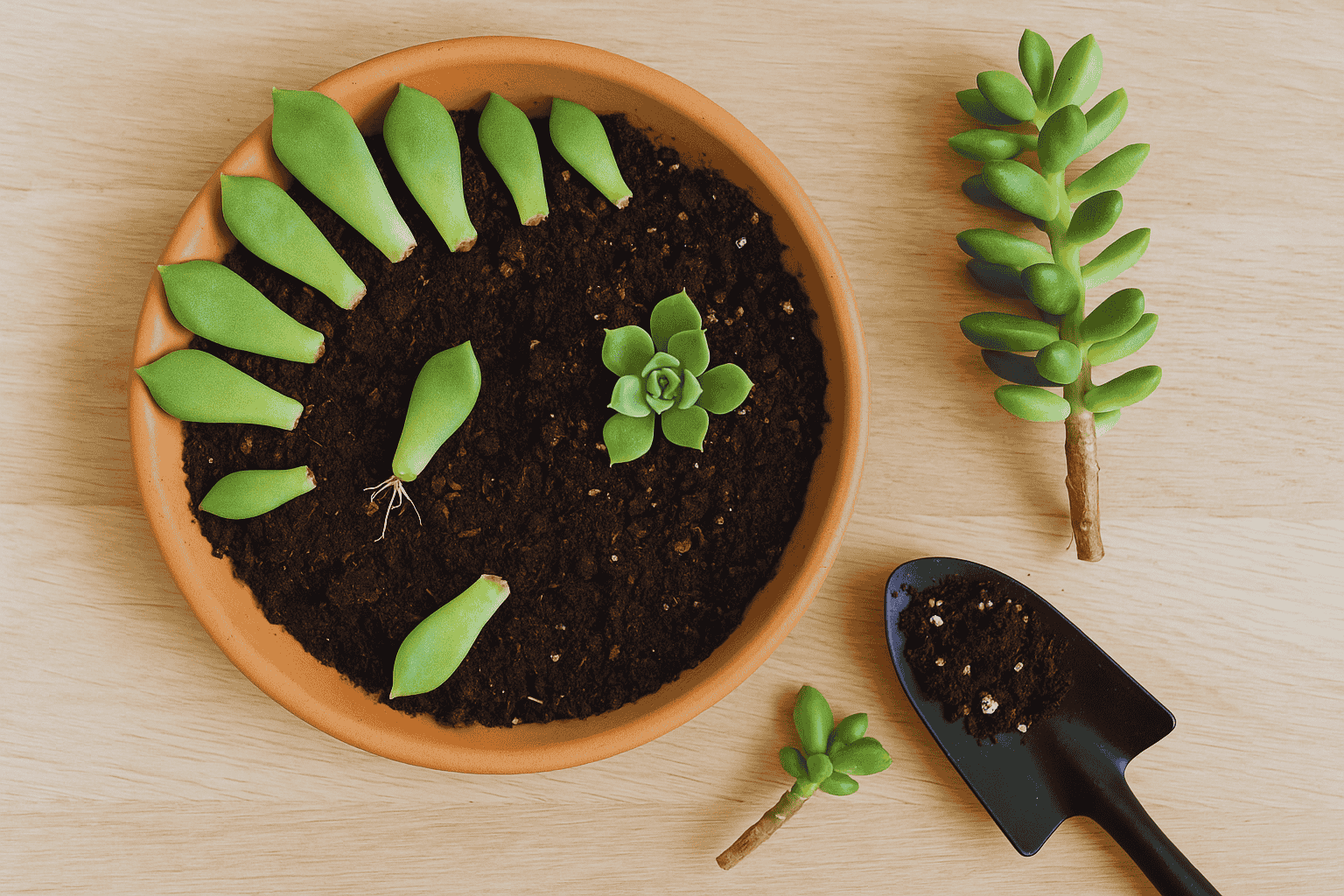
Leaf cuttings – Ideal for rosette-style succulents like Echeveria and Graptopetalum
Stem cuttings – Suitable for trailing types like Sedum or Crassula
Offsets (pups) – Often found at the base of plants like Haworthia or Aloe
Seed propagation – Less common and slower, but still effective for rare varieties
Now, let’s explore each method step by step.
Leaf Cuttings: The Simplest Start
Best for: Echeveria, Graptopetalum, Sedeveria
Step-by-step:
Gently twist off a healthy, whole leaf from the stem.
Allow it to dry for 1–2 days until the wound calluses.
Place the leaf flat on well-draining cactus soil.
Mist every few days — never soak.
Watch for roots and baby rosettes in 2–3 weeks.
Tip: Keep the leaf out of direct sunlight but in bright, indirect light.
Stem Cuttings: Fast and Reliable
Best for: Jade Plant, Sedum, Crassula
Instructions:
Using a sterilized blade, cut a 5–10 cm section of stem.
Remove lower leaves, leaving a clean stem.
Let the cutting dry for 2–3 days until callused.
Plant in a small pot with succulent soil mix.
Water lightly after roots develop (usually 1–2 weeks).
Local insight: In the cooler Dutch winters or Belgian homes, keep the pot near a sunny windowsill but away from drafty spots.
Offsets or Pups: Nature’s Freebies
Best for: Aloe, Haworthia, Sempervivum
These tiny replicas grow around the base of the parent plant.
Gently dig around the pup with your fingers or a spoon.
Detach it, making sure it has some roots.
Allow to dry for 24 hours before planting.
Pot in moist, sandy soil and avoid overwatering.
Result: Pups adapt quickly and are ideal for gifts or window sills in compact modern apartments.
Seed Propagation: Patience Pays Off
While less common, succulent seeds allow you to experiment and grow unique hybrids.
Use a seed-starting tray with cactus mix
Sow seeds thinly and mist gently
Cover with a humidity dome or plastic wrap
Keep warm and lit, ideally with grow lights
Germination can take 2–8 weeks
Note: This method is more technical and better suited for hobbyists with time and patience.
Seasonal Considerations in Belgium & Netherlands
Spring and early summer are the best times for propagation
Avoid winter, when plants enter dormancy
Use grow lights during darker months for consistent results
Humidity is typically higher indoors in these regions, so water sparingly
Choosing the Right Pot for New Succulents
Proper drainage is critical. Modern pots for succulents should feature:
Drainage holes
Breathable materials like ceramic or terra cotta
Compact sizes for mini succulents
Aesthetic appeal for modern interiors
When it comes to pairing style with function, Succulux.be offers a curated range of modern pots for plants that not only complement your decor but also enhance plant health.
Best Soil Mix for Propagation
Succulents despise soggy roots. Whether in Belgium’s rainy climate or humid indoor spaces in the Netherlands, always use:
A cactus or succulent mix
Or a blend: 60% potting soil + 30% sand + 10% perlite
Avoid peat moss-heavy soils, as they retain moisture
Common Mistakes to Avoid
Overwatering newly propagated cuttings
Using leaf cuttings that are damaged or incomplete
Planting before the callus has formed
Not providing enough light (especially in winter months)
Skipping the right pot and soil combo
Where to Buy Quality Succulents and Pots
When looking to buy plants online in Belgium or buy online plants in the Netherlands, look no further than Succulux.be. As a trusted platform, Succulux specializes in:
Carefully packaged mini cacti and succulents
A wide selection of modern plant pots
Local shipping within Belgium and the Netherlands
Customer-focused service and curated collections
Succulux.be offers everything from beginner-friendly varieties to rare plant gems, making it the go-to source for urban gardeners.
How Long Does Succulent Propagation Take?
Leaf cuttings: 2–4 weeks for root growth
Stem cuttings: 7–14 days for roots
Offsets: Can be repotted immediately if roots are present
Seeds: 4–8 weeks to germinate, longer to mature
When Can I Water After Propagation?
Avoid watering immediately. Wait until:
Roots have visibly formed
The callus is fully dry
The plant is stable in soil
Light misting is acceptable during root development. Overwatering at this stage is the number one cause of failure.
FAQs
Can I propagate succulents indoors in winter?
Yes, but use grow lights and ensure the room is warm and free of drafts. Propagation is slower during colder months.
Do I need rooting hormone?
Not necessarily. Succulents are hardy and usually root well without extra chemicals. However, rooting hormone can speed up the process.
How do I know if my propagation is successful?
Look for white roots forming and new growth, such as tiny rosettes or leaves. If leaves turn black or mushy, they likely failed.
What’s the easiest succulent to propagate?
Echeveria and Jade Plant (Crassula ovata) are very beginner-friendly and root easily from leaf or stem cuttings.
Can I propagate store-bought succulents?
Absolutely. Just ensure they’re pest-free and not chemically treated. Let them adjust to your home before cutting.
What should I do with failed cuttings?
Compost them, and learn from the results. Overwatering, lack of light, or poor cuts are often the cause.
Final Thoughts
Propagation isn’t just about growing more plants. It’s about deepening your relationship with nature, understanding plant life cycles, and bringing new life into your home. Whether you’re styling your studio apartment in Rotterdam with mini succulents in modern pots or transforming your Ghent workspace into a green haven, propagation is a powerful, calming ritual.
And when you need quality, beautifully potted succulents delivered locally, trust Succulux.be — the best place to buy plants online in Belgium and the Netherlands.